Learn the cost of living in Germany for international students including accommodation, food, transport, health insurance, and monthly expenses. Complete guide for budgeting your studies in Germany.
Introduction
Germany has become one of the most attractive study destinations for international students. With world-class universities, strong research opportunities, affordable education, and a high standard of living, thousands of students from around the world choose Germany every year for higher education.
One of the biggest reasons students prefer Germany is the relatively low cost of education. Many public universities in Germany offer tuition-free or very low-cost education, especially compared to countries like the United States or the United Kingdom. However, even though tuition fees may be minimal, international students still need to manage their living expenses while studying.
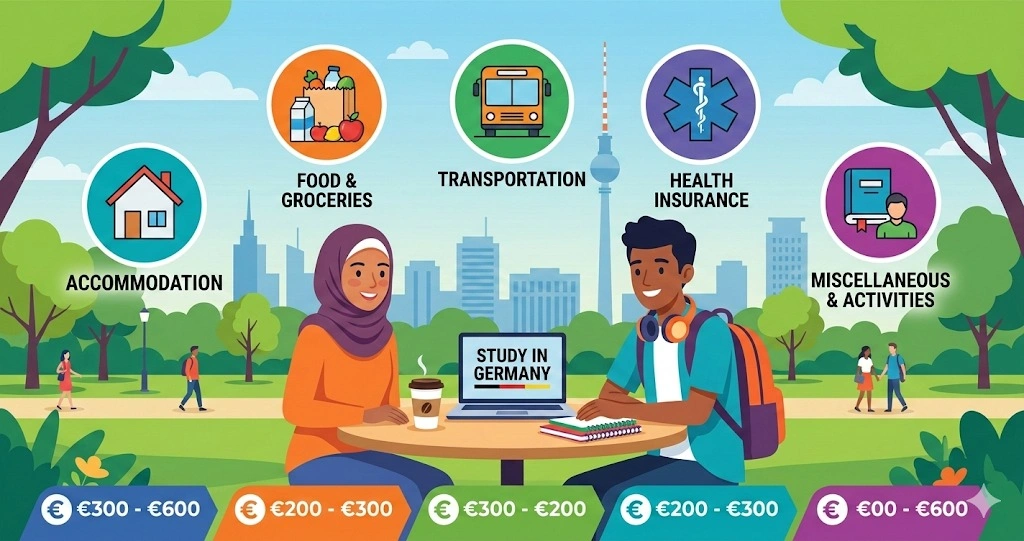
Understanding the cost of living in Germany is extremely important before planning your study abroad journey. Students must budget for accommodation, food, transportation, health insurance, and other daily expenses.
This comprehensive guide explains the cost of living in Germany for international students, including detailed monthly expense estimates, budgeting tips, and ways to reduce costs.
Average Cost of Living in Germany for Students
The cost of living in Germany depends on several factors such as the city you live in, your lifestyle, and your accommodation type.
On average, international students spend €850 to €1,200 per month to cover living expenses.
Typical Monthly Expenses
- Accommodation: €300 – €700
- Food and groceries: €150 – €250
- Health insurance: €100 – €120
- Transportation: €30 – €100
- Internet and phone: €30 – €50
- Study materials: €20 – €50
- Leisure and entertainment: €50 – €150
These expenses may vary depending on the city and personal spending habits.
Accommodation Costs in Germany
Accommodation is usually the largest expense for international students in Germany.
Student Dormitories
Student dormitories are the most affordable housing option.
Average monthly cost:
- €250 to €400
Dormitories are usually managed by student organizations and offer basic facilities such as furnished rooms, shared kitchens, and laundry areas.
Benefits include:
- Lower rent
- Opportunity to meet other students
- Convenient location near universities
However, dormitories are in high demand, so students should apply early.
Shared Apartments
Shared apartments are another popular option for students.
Average monthly cost:
- €350 to €600
In this arrangement, students share an apartment with other roommates and split rent and utility expenses.
Benefits include:
- Lower costs compared to private apartments
- Social living environment
- Flexible housing options
Private Apartments
Private apartments offer more privacy but are more expensive.
Average monthly cost:
- €600 to €900 or more
This option is usually chosen by students who prefer independent living or have higher budgets.
Food and Grocery Expenses
Food is another important part of the monthly budget.
Students who cook at home usually spend €150 to €250 per month on groceries.
Typical grocery items include:
- Bread and bakery products
- Milk and dairy products
- Fruits and vegetables
- Rice, pasta, and cereals
- Meat and eggs
Cooking at home is much cheaper than eating out regularly.
Eating at Restaurants
Eating at restaurants or cafes can increase monthly expenses.
Average costs:
- Budget restaurant meal: €10 – €15
- Fast food meal: €7 – €10
- Coffee: €2 – €4
Many universities also have student cafeterias that provide affordable meals for around €3 to €5.
Transportation Costs
Germany has one of the best public transportation systems in Europe.
Students can travel using:
- Buses
- Trams
- Metro trains
- Regional trains
Many universities offer semester tickets that allow students to use public transportation at discounted prices.
Average transportation costs:
- €30 to €100 per month
Some semester tickets even allow unlimited travel within the city.
Health Insurance Costs
Health insurance is mandatory for all students in Germany.
International students must have valid health insurance to enroll in universities.
Average monthly cost:
- €100 to €120
Public health insurance is usually recommended for students because it offers comprehensive medical coverage.
Health insurance typically covers:
- Doctor visits
- Hospital treatment
- Prescription medicines
- Emergency care
Internet and Mobile Phone Costs
Students also need internet and mobile phone services for daily communication and studies.
Average costs:
- Mobile phone plan: €10 – €30 per month
- Internet connection: €20 – €40 per month
Many students choose affordable prepaid plans that include internet data and calls.
Study Materials and Academic Expenses
Students must also budget for academic materials.
Average monthly cost:
- €20 to €50
These expenses may include:
- Books and textbooks
- Printing and photocopying
- Stationery supplies
- Software or digital tools
Some universities provide access to libraries and online learning resources, which helps reduce costs.
Entertainment and Leisure Expenses
Students also spend money on entertainment, social activities, and personal hobbies.
Average monthly cost:
- €50 to €150
Typical expenses may include:
- Movies and concerts
- Sports activities
- Travel within Germany
- Shopping and social events
Germany offers many cultural festivals and student discounts that make entertainment more affordable.
Cost of Living in Major German Cities
Living expenses vary significantly depending on the city.
Berlin
Berlin is one of the most popular cities for students.
Average monthly cost:
- €900 to €1,200
The city offers vibrant student life, cultural diversity, and many universities.
Munich
Munich is one of the most expensive cities in Germany.
Average monthly cost:
- €1,100 to €1,500
Accommodation costs are higher, but the city offers excellent career opportunities.
Frankfurt
Frankfurt is an important financial hub.
Average monthly cost:
- €1,000 to €1,300
Students studying business or finance often prefer this city.
Leipzig
Leipzig is known for its affordable cost of living.
Average monthly cost:
- €800 to €1,000
It is becoming increasingly popular among international students.
Blocked Account Requirement for Students
International students applying for a student visa usually need to open a blocked account in Germany.
This account proves that students have enough financial resources to support themselves.
The required amount is approximately:
- €11,200 per year
Students can withdraw a limited amount each month to cover living expenses.
Part-Time Work Opportunities for Students
International students in Germany can work part-time while studying.
Students are generally allowed to work:
- 120 full days per year
or - 240 half days per year
Typical student jobs include:
- Retail jobs
- Restaurant work
- Research assistant positions
- Internship roles
- Campus jobs
Students usually earn €10 to €15 per hour, which can help cover living expenses.
Tips to Reduce Living Costs in Germany
Students can manage their expenses effectively by following these tips.
Choose Affordable Housing
Student dormitories or shared apartments are usually the most budget-friendly options.
Use Student Discounts
Many places offer discounts for students, including:
- Museums
- Transportation
- Movie theaters
- Restaurants
Cook at Home
Cooking meals at home is much cheaper than eating out regularly.
Use Public Transportation
Public transport is efficient and affordable compared to owning a car.
Buy Second-Hand Items
Students can save money by buying used furniture, books, and bicycles.
Benefits of Studying in Germany Despite Living Costs
Even though students must manage living expenses, studying in Germany offers significant benefits.
Low or No Tuition Fees
Most public universities charge minimal tuition fees.
High-Quality Education
German universities are known for strong academic standards and research opportunities.
Strong Job Market
Germany has a strong economy and offers good career opportunities for graduates.
International Environment
Students interact with peers from different countries and cultures.
Travel Opportunities
Students can explore many European countries while studying in Germany.
Final Thoughts
Germany is one of the best destinations for international students who want high-quality education at an affordable cost. While students need to plan carefully for living expenses, the overall cost of studying in Germany remains lower compared to many other countries.
By budgeting wisely, choosing affordable housing, using student discounts, and working part-time, international students can comfortably manage their living expenses.
Understanding the cost of living before moving to Germany helps students prepare financially and focus on their academic goals without unnecessary stress.
With proper planning and financial management, studying in Germany can be an enriching experience that opens doors to global career opportunities and personal growth.
FAQs
1. What is the average cost of living in Germany for international students?
The average monthly cost of living ranges between €850 and €1,200 depending on the city and lifestyle.
2. Is Germany expensive for international students?
Germany is relatively affordable compared to other study destinations because many public universities charge little or no tuition fees.
3. Can international students work in Germany?
Yes, international students can work up to 120 full days or 240 half days per year.
4. What is the biggest expense for students in Germany?
Accommodation is usually the largest monthly expense for international students.
5. Do students need health insurance in Germany?
Yes, health insurance is mandatory for all students studying in Germany.
6. How much money is required for a student visa in Germany?
Students typically need to show around €11,200 in a blocked account to obtain a student visa.