Planning to study in the USA? Discover tuition costs, visa process, living expenses, scholarships, and high-paying career opportunities for international students in this complete 2026 guide.
Introduction
Studying in the United States has long been a dream for students around the world. The USA is known for its high-quality education system, globally recognized universities, innovative research opportunities, and excellent career prospects.
Every year, thousands of international students choose the United States to pursue undergraduate, graduate, and doctoral programs in fields such as computer science, business, engineering, medicine, and data science. A degree from a US university can open doors to global job opportunities and help students build successful careers.
However, before making the decision to study abroad, students must understand several important aspects, including tuition costs, living expenses, visa procedures, scholarships, and career opportunities.
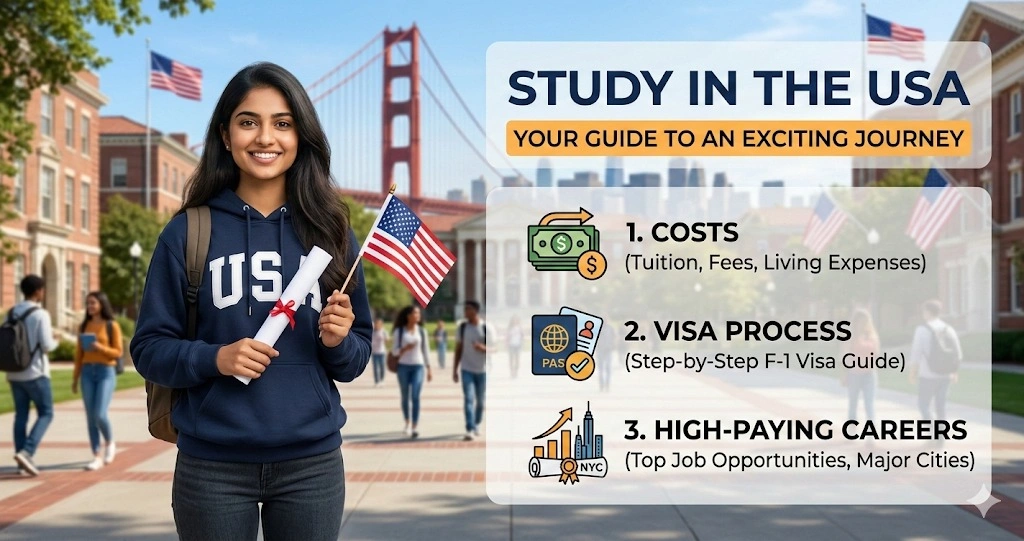
This comprehensive guide explains everything international students need to know about studying in the USA in 2026, including education costs, the student visa process, and the high-paying career opportunities available after graduation.
Why Study in the USA?
The USA is considered one of the best destinations for higher education due to its academic excellence and strong global reputation.
Some of the main reasons students choose the United States include:
- World-class universities
- Advanced research facilities
- Wide range of study programs
- Cultural diversity
- Strong career prospects
- Opportunities to work during and after studies
Degrees from US universities are respected worldwide, making graduates highly competitive in the global job market.
Education System in the USA
The American education system is flexible and student-focused.
Unlike many countries where students must choose a specific field immediately, US universities allow students to explore multiple subjects before selecting a major.
Types of Degrees in the USA
Bachelor’s Degree
- Duration: 4 years
- Popular for fields like computer science, business, and engineering
Master’s Degree
- Duration: 1–2 years
- Provides advanced knowledge and specialization
Doctoral Degree (PhD)
- Duration: 3–6 years
- Focuses on research and academic careers
This flexibility allows students to design their academic path according to their interests and career goals.
Cost of Studying in the USA
One of the most important considerations for international students is the cost of education.
The total expense depends on the type of university, program, and location.
1. Tuition Fees
Tuition fees vary widely between public and private universities.
Public Universities
- Undergraduate programs: $20,000 – $35,000 per year
- Graduate programs: $20,000 – $40,000 per year
Private Universities
- Undergraduate programs: $35,000 – $60,000 per year
- Graduate programs: $40,000 – $70,000 per year
Some specialized programs like MBA or medical degrees may cost even more.
2. Living Expenses
Living costs depend on the city and lifestyle.
Major cities such as New York or San Francisco tend to be more expensive than smaller towns.
Average Living Costs
- Accommodation: $8,000 – $15,000 per year
- Food: $3,000 – $5,000 per year
- Transportation: $1,000 – $2,000 per year
- Health insurance: $1,500 – $2,500 per year
- Personal expenses: $2,000 – $3,000 per year
Total living expenses usually range between $12,000 and $25,000 per year.
Scholarships for International Students
Although studying in the USA can be expensive, many scholarships and financial aid options are available.
Scholarships can significantly reduce tuition costs and make education more affordable.
Types of Scholarships
Merit-Based Scholarships
These scholarships are awarded to students with excellent academic performance, leadership skills, or achievements.
Need-Based Scholarships
These scholarships support students who demonstrate financial need.
Government Scholarships
Government-funded programs help international students pursue education in the USA.
University Scholarships
Many universities offer financial aid specifically for international students.
Receiving a scholarship can reduce financial stress and allow students to focus on their studies.
Student Visa Process for the USA
International students must obtain a student visa before traveling to the United States.
The most common visa for academic programs is the F-1 Student Visa.
Step 1: Get Admission from a US University
Students must first receive an acceptance letter from a recognized US university.
After admission, the university issues a document called Form I-20, which is required for the visa application.
Step 2: Pay the SEVIS Fee
Students must pay the SEVIS (Student and Exchange Visitor Information System) fee, which supports the tracking system for international students.
Step 3: Complete the Visa Application
Students must complete the DS-160 online visa application form.
This form includes personal information, education history, and travel details.
Step 4: Schedule Visa Interview
After submitting the application, students must schedule a visa interview at the nearest US embassy or consulate.
Step 5: Attend the Visa Interview
During the interview, students may be asked questions such as:
- Why do you want to study in the USA?
- Why did you choose this university?
- What are your career plans after graduation?
- Who will finance your education?
Students should answer confidently and provide supporting documents.
Documents Required for Student Visa
Important documents include:
- Valid passport
- Form I-20
- DS-160 confirmation
- Visa appointment confirmation
- Financial proof
- Academic transcripts
- English proficiency test scores (IELTS or TOEFL)
Once approved, students can travel to the USA before their program begins.
Work Opportunities While Studying
International students in the USA are allowed to work part-time while studying.
This helps students gain experience and manage some living expenses.
On-Campus Work
Students can work up to 20 hours per week during the academic semester.
Common on-campus jobs include:
- Library assistant
- Research assistant
- Campus office staff
- Cafeteria worker
During vacations, students can work up to 40 hours per week.
Optional Practical Training (OPT)
After completing their degree, international students may apply for Optional Practical Training (OPT).
OPT allows students to work in the USA for practical experience related to their field of study.
OPT Duration
- Standard OPT: up to 12 months
- STEM OPT Extension: additional 24 months
Students in science, technology, engineering, and mathematics fields can therefore work for up to 3 years in the USA.
High-Paying Career Opportunities in the USA
One of the biggest advantages of studying in the USA is access to high-paying career opportunities.
Graduates from US universities are highly valued by employers worldwide.
1. Software Engineering
Technology companies constantly seek skilled software engineers.
Average salary: $90,000 – $140,000 per year
Popular job roles include:
- Software Developer
- Full-Stack Engineer
- Mobile App Developer
2. Data Science
Data science is one of the fastest-growing careers globally.
Average salary: $100,000 – $150,000 per year
Common roles include:
- Data Analyst
- Machine Learning Engineer
- Data Scientist
3. Artificial Intelligence
AI is transforming industries such as healthcare, finance, and robotics.
Average salary: $110,000 – $160,000 per year
Students with AI expertise have strong career prospects.
4. Business and Management
Graduates with MBA degrees often work in leadership roles.
Average salary: $80,000 – $150,000 per year
Popular careers include:
- Business Analyst
- Marketing Manager
- Financial Consultant
5. Cybersecurity
Cybersecurity professionals protect organizations from digital threats.
Average salary: $95,000 – $145,000 per year
Demand for cybersecurity experts continues to grow rapidly.
Benefits of Studying in the USA
Studying in the USA offers many advantages beyond education.
Global Recognition
Degrees from US universities are respected worldwide.
Professional Networking
Students can connect with professors, industry professionals, and alumni networks.
Cultural Diversity
Students interact with peers from different cultures and backgrounds.
Innovation and Entrepreneurship
The USA encourages startups, innovation, and creative thinking.
Tips for International Students Planning to Study in the USA
Students should plan carefully before applying.
Helpful Tips
- Start researching universities early
- Prepare for English language tests
- Apply for scholarships
- Maintain strong academic records
- Prepare financial documents for visa applications
- Apply before university deadlines
Proper planning increases the chances of admission and visa approval.
Challenges International Students May Face
Although studying in the USA offers many benefits, students may face some challenges.
Common Challenges
- High tuition fees
- Cultural adjustment
- Homesickness
- Academic pressure
- Managing finances
However, universities offer support services such as counseling, international student advisors, and career guidance.
Conclusion
Studying in the USA is an exciting opportunity for international students seeking high-quality education, global exposure, and strong career prospects.
Although the costs of tuition and living expenses can be significant, scholarships, part-time work opportunities, and post-study employment programs help make education more accessible.
With world-class universities, innovative research facilities, and access to high-paying careers in fields like technology, business, and data science, the USA continues to be one of the best destinations for higher education in 2026.
For students who dream of building successful international careers, studying in the United States can be a life-changing investment in their future.
FAQs
1. How much does it cost to study in the USA?
The total cost usually ranges between $30,000 and $70,000 per year, including tuition and living expenses.
2. What visa is required to study in the USA?
International students typically apply for the F-1 Student Visa for academic programs.
3. Can international students work while studying in the USA?
Yes, students can work up to 20 hours per week on campus during the academic semester.
4. What is OPT in the USA?
Optional Practical Training (OPT) allows international students to work in the USA after graduation for up to 12 months or up to 36 months for STEM programs.
5. Are scholarships available for international students?
Yes, many universities and organizations offer merit-based and need-based scholarships.
6. Which courses offer the highest salaries in the USA?
Courses in computer science, artificial intelligence, data science, business, and cybersecurity often lead to high-paying careers.
7. Is studying in the USA worth it?
Yes, studying in the USA provides high-quality education, international exposure, and strong career opportunities.