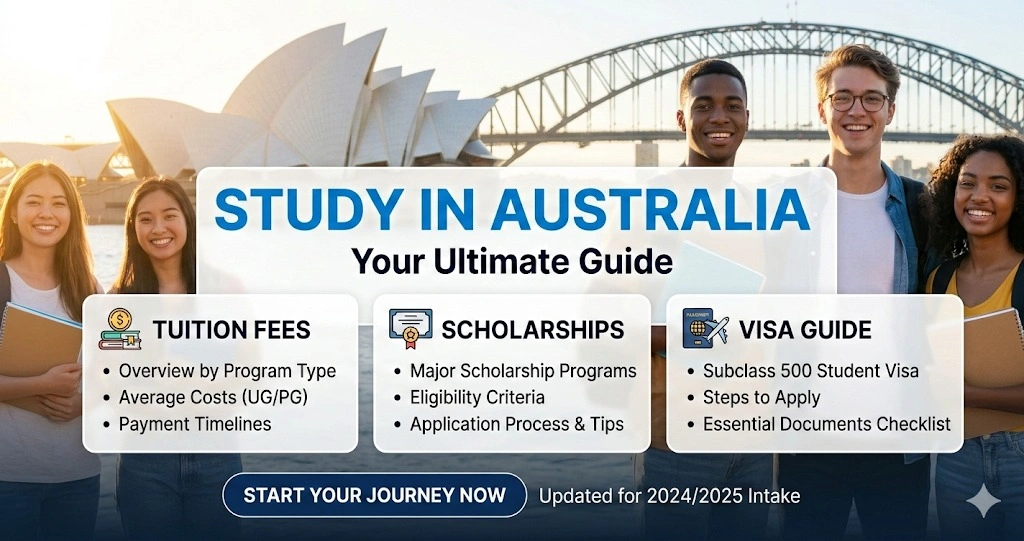
Planning to study in Australia? Learn about tuition fees, scholarships, living costs, and the Australian student visa process in this complete guide for international students in 2026.
Introduction
Australia has become one of the most popular destinations for international students seeking high-quality education and global career opportunities. With world-renowned universities, diverse cultures, modern cities, and a welcoming environment, Australia attracts hundreds of thousands of students from around the world each year.
The Australian education system is recognized for its strong academic standards, innovative research programs, and practical learning approaches. Students who study in Australia benefit from internationally recognized degrees, multicultural exposure, and opportunities to gain valuable work experience during and after their studies.
However, before deciding to study abroad, students should understand important aspects such as tuition fees, scholarship opportunities, living costs, and visa requirements.
This comprehensive guide explains everything international students need to know about studying in Australia, including the cost of education, available scholarships, and the student visa application process.
Why Study in Australia?
Australia offers many advantages that make it one of the top study destinations in the world.
1. Globally Recognized Universities
Australian universities are known for their high academic standards and research excellence. Degrees earned in Australia are recognized worldwide.
2. Wide Range of Study Programs
Students can choose from thousands of programs in fields such as:
- Business and Management
- Engineering
- Information Technology
- Medicine and Health Sciences
- Environmental Science
- Data Science
- Hospitality and Tourism
3. Multicultural Environment
Australia is home to students from more than 190 countries. This cultural diversity creates a welcoming and inclusive learning environment.
4. Work Opportunities During Study
International students are allowed to work part-time while studying, helping them gain experience and support their living expenses.
5. High Quality of Life
Australia offers safe cities, modern infrastructure, excellent healthcare systems, and beautiful natural landscapes.
Education System in Australia
Australia’s education system is structured and flexible, allowing students to pursue various academic and professional programs.
Major Types of Degrees
Bachelor’s Degree
- Duration: 3 to 4 years
- Designed for undergraduate students after completing secondary education
Master’s Degree
- Duration: 1 to 2 years
- Provides specialized knowledge in a specific field
Doctoral Degree (PhD)
- Duration: 3 to 4 years
- Focuses on research and academic advancement
Vocational Education and Training (VET)
These programs focus on practical skills and career-oriented training in fields such as hospitality, construction, and business.
Tuition Fees in Australia
Tuition fees vary depending on the university, program, and level of study.
Undergraduate Programs
Average tuition fees for international students range from:
AUD 20,000 to AUD 45,000 per year
Fields such as medicine or engineering may have higher fees.
Postgraduate Programs
Master’s programs generally cost:
AUD 22,000 to AUD 50,000 per year
MBA and specialized programs may cost more depending on the institution.
Doctoral Programs
PhD programs may cost between:
AUD 18,000 and AUD 42,000 per year
However, many doctoral students receive scholarships or research funding.
Living Costs in Australia
International students must also consider living expenses while studying.
The cost of living depends on the city and lifestyle.
Average Living Expenses
Accommodation: AUD 8,000 – AUD 20,000 per year
Food: AUD 3,000 – AUD 6,000 per year
Transportation: AUD 1,200 – AUD 2,000 per year
Health insurance: AUD 500 – AUD 800 per year
Personal expenses: AUD 2,000 – AUD 4,000 per year
Overall, students typically spend AUD 20,000 to AUD 30,000 annually on living costs.
Major cities such as Sydney and Melbourne are generally more expensive than smaller cities.
Scholarships for International Students in Australia
Australia offers many scholarships that help reduce the financial burden for international students.
These scholarships are funded by the government, universities, and private organizations.
1. Government Scholarships
The Australian government offers several scholarship programs to support international students.
These scholarships may cover tuition fees, living expenses, and travel costs.
2. University Scholarships
Many Australian universities provide financial assistance based on academic merit or financial need.
Examples include:
- Merit-based scholarships
- Research scholarships
- Partial tuition fee waivers
3. Private Scholarships
Some private organizations and foundations also provide scholarships to talented international students.
Students with strong academic records and leadership qualities have higher chances of receiving scholarships.
Student Visa for Australia
International students must obtain an Australian Student Visa (Subclass 500) to study in the country.
This visa allows students to study full-time and work part-time during their program.
Student Visa Application Process
Step 1: Receive an Offer Letter
Students must first apply to an Australian university and receive an official offer letter.
After accepting the offer, students receive a Confirmation of Enrollment (CoE) document.
Step 2: Prepare Required Documents
Students must gather several documents for the visa application.
These include:
- Valid passport
- Confirmation of Enrollment (CoE)
- Academic transcripts
- English language test scores (IELTS, TOEFL, or PTE)
- Financial proof
- Health insurance
Step 3: Purchase Overseas Student Health Cover (OSHC)
International students must have Overseas Student Health Cover to receive medical services while studying in Australia.
Step 4: Submit Visa Application
Students submit the visa application online through the immigration portal.
Step 5: Attend Medical Examination
Some students may be required to complete a health examination.
Step 6: Visa Approval
Once approved, students receive their student visa and can travel to Australia before their course begins.
Work Opportunities for International Students
International students in Australia can work part-time during their studies.
Work Limit
Students can work up to 48 hours per fortnight during the academic semester.
During holidays, students may work full-time.
Working while studying helps students gain valuable professional experience and earn extra income.
Post-Study Work Opportunities
Australia offers post-study work opportunities for international graduates.
Graduates from Australian universities may apply for a Temporary Graduate Visa that allows them to work in Australia after completing their degree.
Post-Study Work Duration
Bachelor’s Degree: 2–3 years
Master’s Degree: 3 years
Doctoral Degree: 4 years
This opportunity allows graduates to gain professional experience in the Australian job market.
Popular Courses for International Students
Several academic programs are particularly popular among international students studying in Australia.
Information Technology
IT programs focus on software development, data science, cybersecurity, and artificial intelligence.
Business and Management
Business degrees prepare students for leadership roles in global organizations.
Engineering
Engineering programs cover fields such as civil, mechanical, electrical, and software engineering.
Health Sciences
Australia is known for excellent programs in nursing, medicine, and public health.
Hospitality and Tourism
Australia’s strong tourism industry creates excellent career opportunities in hospitality management.
Career Opportunities After Studying in Australia
Graduates from Australian universities have strong career prospects in various industries.
High-Demand Careers
Software Developer
Data Analyst
Civil Engineer
Financial Analyst
Healthcare Professional
Marketing Manager
Australia’s growing economy and skilled workforce demand create excellent employment opportunities.
Tips for International Students
Students planning to study in Australia should prepare early.
Helpful Tips
Research universities and programs carefully
Apply for scholarships early
Prepare English language test scores
Maintain strong academic performance
Create a financial plan for tuition and living expenses
Proper preparation improves admission chances and ensures a smoother transition.
Challenges International Students May Face
Studying abroad can also present certain challenges.
Common Challenges
High tuition costs
Adjusting to a new culture
Homesickness
Managing academic workload
Balancing work and study
However, Australian universities provide strong support services to help students succeed.
Conclusion
Australia remains one of the best destinations for international students seeking high-quality education and global career opportunities. With internationally recognized universities, diverse academic programs, and a welcoming multicultural environment, Australia provides an excellent learning experience.
Although tuition fees and living expenses can be significant, scholarships and part-time work opportunities help reduce financial pressure.
The student visa process is relatively straightforward, and graduates also benefit from post-study work opportunities that allow them to gain valuable professional experience.
For students who want world-class education, cultural exposure, and strong career prospects, studying in Australia can be a life-changing decision.
FAQs
1. How much does it cost to study in Australia?
Tuition fees typically range from AUD 20,000 to AUD 50,000 per year, depending on the program and university.
2. Can international students work while studying in Australia?
Yes, international students can work up to 48 hours per fortnight during their studies.
3. What visa do students need to study in Australia?
Students must apply for the Student Visa (Subclass 500).
4. Are scholarships available for international students?
Yes, the Australian government, universities, and private organizations offer many scholarships.
5. Is studying in Australia expensive?
Australia can be expensive, but scholarships and part-time work opportunities help manage costs.
6. Can students stay in Australia after graduation?
Yes, graduates can apply for a Temporary Graduate Visa to gain work experience.
7. What are the most popular courses in Australia?
Popular programs include IT, business, engineering, healthcare, and hospitality management.